
Experiences · 5 min · · by Sofia Ramirez
What happens at a real Argentine asado, course by course
Short answer
What happens at a real Argentine asado?
A real Argentine asado takes about three hours, follows a fixed order and is cooked by one person over embers rather than flame. It opens with sausages and grilled cheese, moves through offal, and only reaches the main cuts once everybody has been standing around talking for an hour. A restaurant parrilla sells you the meat. An asado sells you the afternoon.
What this guide covers
- The order, and why it never changes
- The rules a visitor should know
- What an Argentine asado experience with a family includes
- Argentine asado at home versus the restaurant parrilla
Key Takeaways
- The asado is a sequence, not a menu. Chorizo and provoleta first, achuras second, the good cuts last, and it never changes.
- One person cooks. The asador is not sharing the tongs, and offering to help is not the compliment you think it is.
- Nothing is cooked over flame. The fire is built to one side and the embers are moved under the grill by hand.
- Argentine beef is largely grass fed, which makes it leaner and more mineral than grain finished beef, and it is why it is cooked slowly and served without sauce on it.
- A hosted family asado in Palermo Soho costs US$114 per person for three hours, including a bottle of wine per two guests.
The order, and why it never changes
Argentina’s own culture ministry lists the asado alongside dulce de leche and the empanada as Patrimonio Cultural Alimentario y Gastronómico Argentino, and the government’s own tourism site names Miguel Riglos, in La Pampa, as the home of the Fiesta Nacional del Asador Criollo held there every year. None of that changes the order below, which is older than either declaration.
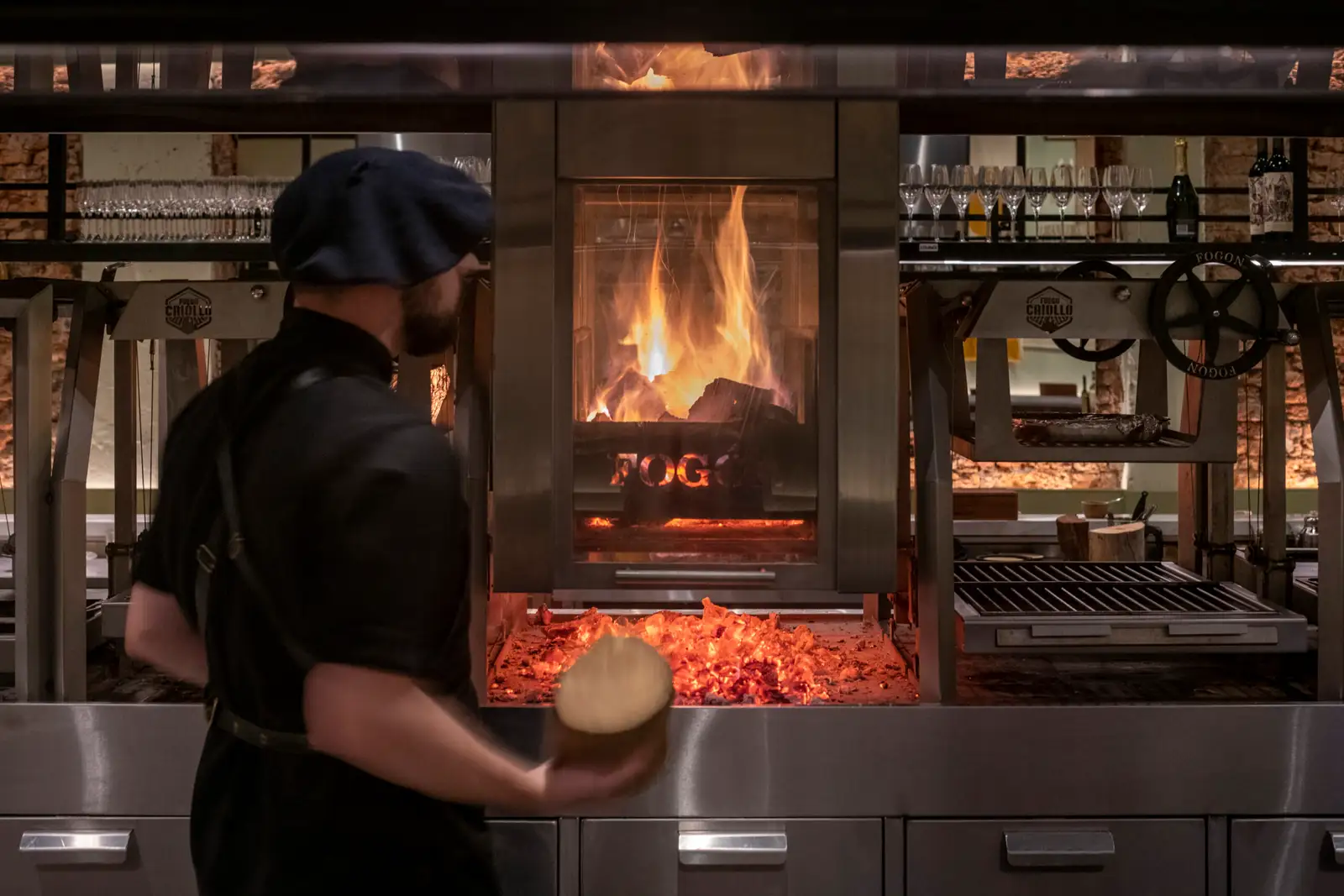
The fire, forty minutes before anyone eats. Wood or charcoal is lit at one end of the parrilla and burned down to embers. Those embers are then shovelled under the grill in a thin, even layer. If you see flames licking the meat, something has gone wrong and everybody there knows it.
Picada. While the fire settles, cheese, salami, olives and bread appear, with wine or a fernet. This is not a starter in the restaurant sense, it is the reason the fire has forty minutes.
Provoleta. A thick disc of provolone grilled until the outside is crusted and the middle collapses, finished with oregano and olive oil, eaten immediately with bread. It is the first thing off the grill and it disappears in ninety seconds.
Chorizo and morcilla. The sausages, and the blood sausage. Split a chorizo, put it in bread with chimichurri, and you have a choripan, which is served standing up, before anybody has sat down.
Achuras. The offal. Mollejas, sweetbreads, cooked until the outside is crisp and squeezed with lemon, are the item Argentines will defend hardest and the one visitors most often decide they love. Chinchulines and riñones round it out. You are allowed to skip this course. You will be quietly noted.
The cuts. Only now. Asado de tira, the short ribs cut across the bone, vacio, the flank, entrana, the skirt, and depending on the house a bife or a matambre. They come off the grill in stages and are carved onto a shared board.
Salad, bread, and nothing else. Ensalada mixta of lettuce, tomato and onion. Bread. Occasionally potatoes. The plate is not the point.
Dessert, coffee and the part where nobody leaves. Usually something with dulce de leche. The eating takes an hour. The sitting afterwards takes as long as it takes.
The rules a visitor should know
The asador is in charge and does not want help. One person runs the fire, from lighting it to carving. It is a position of honour and it is also three hours of work. Standing near them with a drink and asking questions is welcome. Touching the tongs is not.
Do not ask for it well done, and do not ask for sauce on it. Chimichurri, the parsley, garlic, oregano, vinegar and oil sauce, is on the table for those who want it, along with salsa criolla. Argentine cooks put neither on the meat while it cooks. Grass fed beef has a flavour that is the reason for the whole afternoon.
Nothing is ready when you are told it is ready. “Ya casi esta” translates as “almost ready” and means anywhere between fifteen minutes and an hour. Eat the picada. That is what it is for.
Bring wine, do not bring food. A bottle of Malbec is the correct gift for an invitation. Arriving with a dish suggests you did not think there would be enough.
What an Argentine asado experience with a family includes
The Argentine family asado experience costs US$114 per person and runs three hours in a home in Palermo Soho, a few steps from Plaza Armenia.
| What | Detail |
|---|---|
| Price | US$114 per person |
| Duration | 3 hours |
| Location | A family home in Palermo Soho, near Plaza Armenia |
| Hosts | Betty and Marcelo |
| Wine | One bottle per two guests |
| Beef | 100 percent grass fed |
| Dessert | Dulce de leche ice cream |
| Availability | Every day |
The difference from a parrilla restaurant is not the quality of the beef, which is excellent in both. It is that you are standing next to the fire while it is being cooked, in somebody’s home, with the person who cooked it explaining what is going on the grill and why it is going on now. Betty and Marcelo host it themselves, which is the whole product.
Three hours sounds long for a meal and is exactly right for this one. The first hour has almost no meat in it.
Argentine asado at home versus the restaurant parrilla
Both are worth doing, and they answer different questions.
| Family asado | Parrilla restaurant | |
|---|---|---|
| Cost | US$114 per person, all in | US$25 to US$60 per person for the meat |
| Length | 3 hours, fixed | As long as you want |
| What you get | The sequence, the fire, the explanation, the household | The cuts, cooked well, on a plate |
| Best for | Understanding why Sunday looks like this | Eating a very good bife de chorizo |
If you are choosing between them on a short trip, the honest split is this: book the family asado for the culture and go to a parrilla later in the week for the steak. Doing it in the other order makes the asado feel like a second dinner.
Where to start
If you have one evening and want the thing you will still be describing at home, book the family asado at US$114 and eat nothing substantial beforehand.
If you would rather learn to cook than to eat, the empanada cooking class at US$98 is the hands on version of the same tradition (our empanada guide covers the regional versions), and our list of things to do in Buenos Aires under US$100 covers everything that fits below this price. For the other ritual that runs every Argentine gathering, see how to drink mate.
Places in this guide
Frequently asked
What is the difference between an asado and a barbecue?
Time and structure. A barbecue is a cooking method. An asado is a fixed sequence of courses cooked slowly over embers by one designated person, and it occupies an afternoon rather than an hour.
What cuts of meat are served at an Argentine asado?
Chorizo and morcilla first, then achuras, then asado de tira, vacio and entrana, with a bife or a matambre depending on the house.
How long does an Argentine asado last?
Around three hours from fire to coffee, and often much longer at a family Sunday. The hosted experience in Palermo Soho runs three hours.
Is there a vegetarian option at an asado?
At a family asado, provoleta, grilled vegetables, salad and bread carry a vegetarian guest comfortably. Say so when you book, since the grill is planned in advance.
What wine goes with asado?
Malbec, and specifically a Mendoza Malbec, which is what will be on the table. Bonarda and Cabernet Franc are the local alternatives worth asking for.
Can children go to an asado experience?
Yes. It is a family meal in a family home, and Argentine gatherings are full of children.