
Practical · 6 min · · by Sofia Ramirez
Is Buenos Aires safe for tourists? A practical answer
Short answer
Is Buenos Aires safe for tourists?
Is Buenos Aires safe for tourists? Largely, yes. The US State Department rates Argentina at Level 1, its lowest tier. Only Rosario carries a higher warning, and it is a different city. The real risk is petty theft: pickpocketing, the mustard scam, and occasional express kidnappings in a few crowded areas.
What this guide covers
- Is Buenos Aires safe for tourists? What the advisories say
- The crime that actually affects visitors
- Areas the FCDO flags for extra care
- Protests and demonstrations
- Precautions that work
- Is Buenos Aires safe for tourists at night?
Key Takeaways
- Argentina holds a Level 1 advisory, exercise normal precautions, from the US State Department. Only Rosario, a different city, sits at Level 2, for drug-related violence.
- The FCDO, updated 7 May 2026, names pickpocketing, armed robbery risk and occasional express kidnappings as the crime that affects travellers. It does not warn against the trip itself.
- The areas it flags for extra care are specific: La Boca, San Telmo, Retiro and the stretch around the Obelisco, not the city as a whole.
- Buenos Aires’ own tourism office calls the city “safe” with “high police presence” and runs a tourist police station for visitors, per turismo.buenosaires.gob.ar.
Is Buenos Aires safe for tourists? What the advisories say
Two governments answer this the same way. Argentina carries a Level 1 advisory from the US State Department: exercise normal precautions. That is the lowest of its four tiers.
The advisory does not single out Buenos Aires. The one part of the country the State Department rates higher is Rosario, a Level 2 city roughly 300km away, cited for drug-related violence with no link to the capital.
The UK’s FCDO advice sits at a similar level of concern. It does not warn against travel to Buenos Aires. Instead it lists the specific crime types visitors run into and the specific places they happen, which is a more useful shape of warning than a single traffic-light colour.
Both are written for the whole country, and both agree: normal precautions, a short list of known tricks, no reason to cancel a trip.
The crime that actually affects visitors
The FCDO’s list is short and specific. Pickpocketing on public transport and at bus and train terminals tops it. Bag-cutting in crowds and phone-snatching on the street are named separately, because the setting differs.
The mustard scam is named for Buenos Aires directly. An accomplice sprays mustard, ketchup or something similar on a tourist. A second person then offers to help clean it off while a bag or pockets get emptied. Knowing the trick removes most of its power: the helpful stranger is the tell.
Armed robbery is listed as a risk, not a routine event. Short-term abductions, what the advisory still calls express kidnappings, are described as occasional. That word choice matters. The FCDO could have dropped the entry if the risk had passed. Instead it kept the entry in the 7 May 2026 update and called it occasional, not common. Treat it the way the source does: real, worth knowing the shape of, not the headline of the trip.
Areas the FCDO flags for extra care
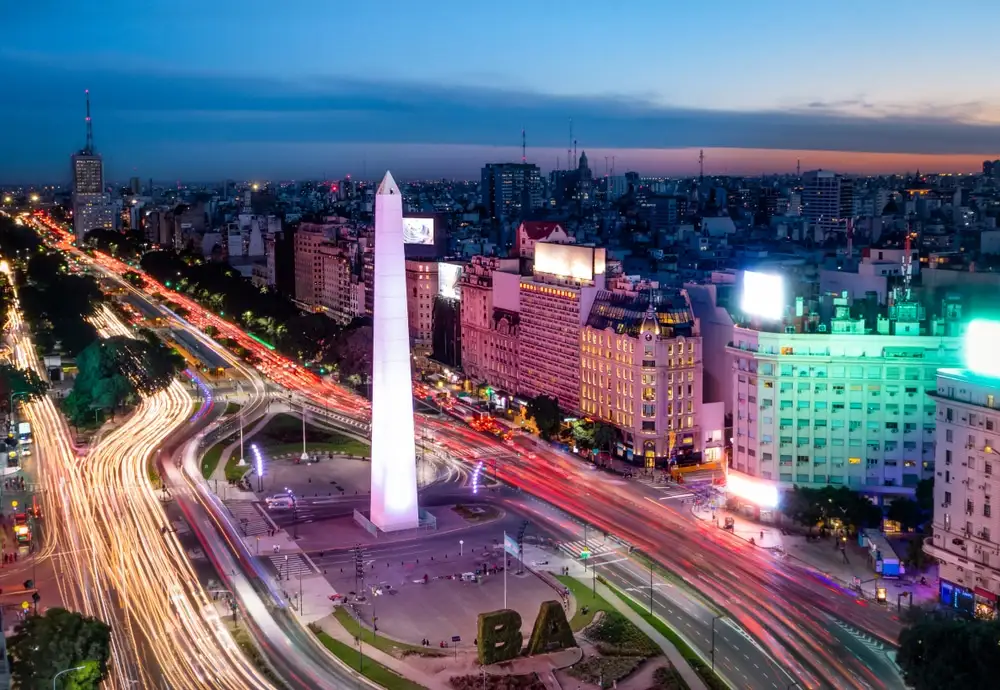
The advisory names specific places rather than warning about the whole city: La Boca, San Telmo, Retiro and its bus terminal, and the run of Florida Street, Avenida de Mayo and Avenida Rivadavia near the Obelisco. These are also among the most visited parts of Buenos Aires. Crowds are where pickpockets work, not where violent crime concentrates.
The advice does not name Recoleta, Palermo or Puerto Madero among the areas needing extra care. That is not an official safe list. The FCDO’s page does not rank neighbourhoods, but the gap is worth stating plainly rather than filled with a guess.
La Boca rewards a guide over a solo wander. Caminito itself is two blocks long, heavily visited and covered by the flagged advice. A few streets past it is a working port area, not somewhere to explore alone. A guided stop, like the one built into our Buenos Aires city tour, covers Caminito, Plaza de Mayo and Recoleta with someone who knows where the visited strip ends.
Protests and demonstrations
The FCDO notes that demonstrations and piquetes happen more often in Argentina than in the UK. Some draw large crowds, and a few turn violent. Its advice is to avoid marches and protests, not watch from the edge. Check local news for planned routes too: they close streets around Plaza de Mayo and 9 de Julio with little notice.
This is a different risk from street crime. It is about being caught in a crowd, not about being targeted. Walk around a demonstration, the way the advisory suggests, rather than into it.
Precautions that work
None of this calls for a change of plans, just ordinary habits kept up:
- Keep phones and cameras out of sight when not in use. A phone visible on the street is the trigger the FCDO names most often.
- Use a licensed radio taxi or a booked app, not an unmarked car hailed on the street, especially late at night. Our public transportation guide covers which apps are legal and how the subte and buses work day to day.
- Carry small pesos and leave large amounts of cash at the hotel. Our guide to paying in Argentina covers cards, cash and the VAT refund in full.
- Skip the helpful stranger if something spills on you in a crowd. Wipe it off yourself, or step into a shop, rather than accept the offer of help.
- Ask hotel staff which streets to avoid at night near your address. A recommendation can change block by block, and staff know the current picture better than an advisory updated months ago.
Is Buenos Aires safe for tourists at night?
Neither advisory treats night as its own risk category, so there is no separate warning that switches on after dark. The FCDO’s list of areas for extra care, La Boca, San Telmo, Retiro and the stretch near the Obelisco, is not qualified by time of day, so it applies at any hour.
Recoleta, Palermo and the city centre stay off that list at any hour too. The one habit worth changing after dark is transport: book a car to the door rather than walk, even a short distance, once the crowds that make daytime pickpocketing possible have thinned out.
Emergency numbers and the tourist police
The city’s own tourism office lists three numbers, staffed 24 hours a day: 911 for a general emergency, 101 for police, 107 for an ambulance. For anything short of an emergency, the Comisaría del Turista (Tourist Police Station) at Av. Corrientes 436 takes theft reports, handles lost documents and helps visitors reach their embassy, with staff who speak English among other languages.
None of this replaces travel insurance or common sense. It is worth saving the address and the three numbers before you land, rather than searching for them after something has already gone wrong.
Places in this guide
Frequently asked
What travel advisory level does the US give Buenos Aires?
Argentina sits at Level 1, exercise normal precautions, the lowest of the State Department's four tiers. The one carve-out is Rosario, a different city in Santa Fe province, rated Level 2 for drug-related violence. Buenos Aires is not singled out for a higher rating.
Is the express kidnapping warning about Buenos Aires still current?
Yes, but it is described as occasional, not common. The FCDO's safety and security page for Argentina, updated 7 May 2026, still lists short-term opportunistic abductions among the risks, next to pickpocketing and the mustard scam, rather than as a retired warning from an earlier decade.
Which Buenos Aires neighbourhoods does the FCDO flag for extra care?
La Boca, San Telmo, Retiro and its bus terminal, and the Florida Street to Obelisco stretch along Avenida Rivadavia and Avenida de Mayo. Its advice does not name Recoleta, Palermo or Puerto Madero among them.
What number do you call in an emergency in Buenos Aires?
Dial 911 for a general emergency, 101 for police, or 107 for an ambulance, all staffed 24 hours a day according to the city's tourism office. The Comisaría del Turista at Av. Corrientes 436 takes theft reports and helps with lost documents, with English-speaking staff.