
Practical · 8 min · · by Carla Quispe
The best time to visit Machu Picchu, month by month
Short answer
What is the best time to visit Machu Picchu?
The best time to visit Machu Picchu is May to September, the dry season, when a clear morning is likeliest and tickets are hardest to get. April and October are drier than their reputation and far easier to book, and December to March works if you keep a spare day. Four of the ten official routes open only in high season.
What this guide covers
- The best time to visit Machu Picchu, in short
- Why the dry season is also the crowded season
- The month decides which routes you can walk
- April and October, the two months that get overlooked
- The best time to visit Machu Picchu if you only have the rainy season
- What the month does to tickets and trains
- The altitude decides the order, not the month
Key Takeaways
- May to September is dry and reliable, and that is exactly why tickets and trains are hardest to get.
- The month also decides what you can walk: four of the ten official routes are limited to high season.
- April and October are the two months worth booking on purpose: drier than their reputation, and outside high season.
- December to March is wet, cheap and green. It works with one spare day, and it goes wrong without one.
- February closes the Inca Trail entirely. Machu Picchu itself stays open.
The best time to visit Machu Picchu, in short
The dry season runs May to September and the wet season December to March, with April and October sitting between them. The site is open every month of the year.
What changes month to month is not whether you can go. It is four things at once: the odds of a clear morning, which routes are open, how far ahead you have to book, and what you pay for the hotels and the train around it. They all move together and in the same direction, which is why there is no single best month for everyone.
If you want the photograph and you have planned months ahead, take the dry season. If you are deciding late, or you would rather not queue, take April or October. If the trip is set by school holidays in January, go anyway, and read the spare-day section below.
Why the dry season is also the crowded season
May to September is when mornings are cold, bright and clear, and cloud burns out of the valley through the morning instead of building into rain.
That reliability is not a secret, and the site is not elastic. Entry is by circuit and timed slot, the quotas are fixed, and in those months they sell out weeks ahead.
The same months price the Sacred Valley hotels and the train at their highest, because everyone is moving through a single valley on the same days.
None of that is a reason to avoid the dry season. It is a reason to book early, and to accept that you are buying certainty of weather rather than solitude.
The month decides which routes you can walk
This is the part almost no seasonal guide mentions, and it is the strongest argument in the whole decision.
Peru’s official ticketing portal lists three circuits grouping ten visitor routes, in force since 1 June 2024, and it flags four of them — routes 1-C, 1-D, 3-C and 3-D — as limited to high season. Circuit 1 is the panoramic one, circuit 2 is the classic view most people picture, and circuit 3 runs lower through the royal sector.
So the trade is wider than weather against crowds. Going in February buys you an emptier site and takes some of the map off the table. Going in July gives you the full map and puts you on it with everyone else.
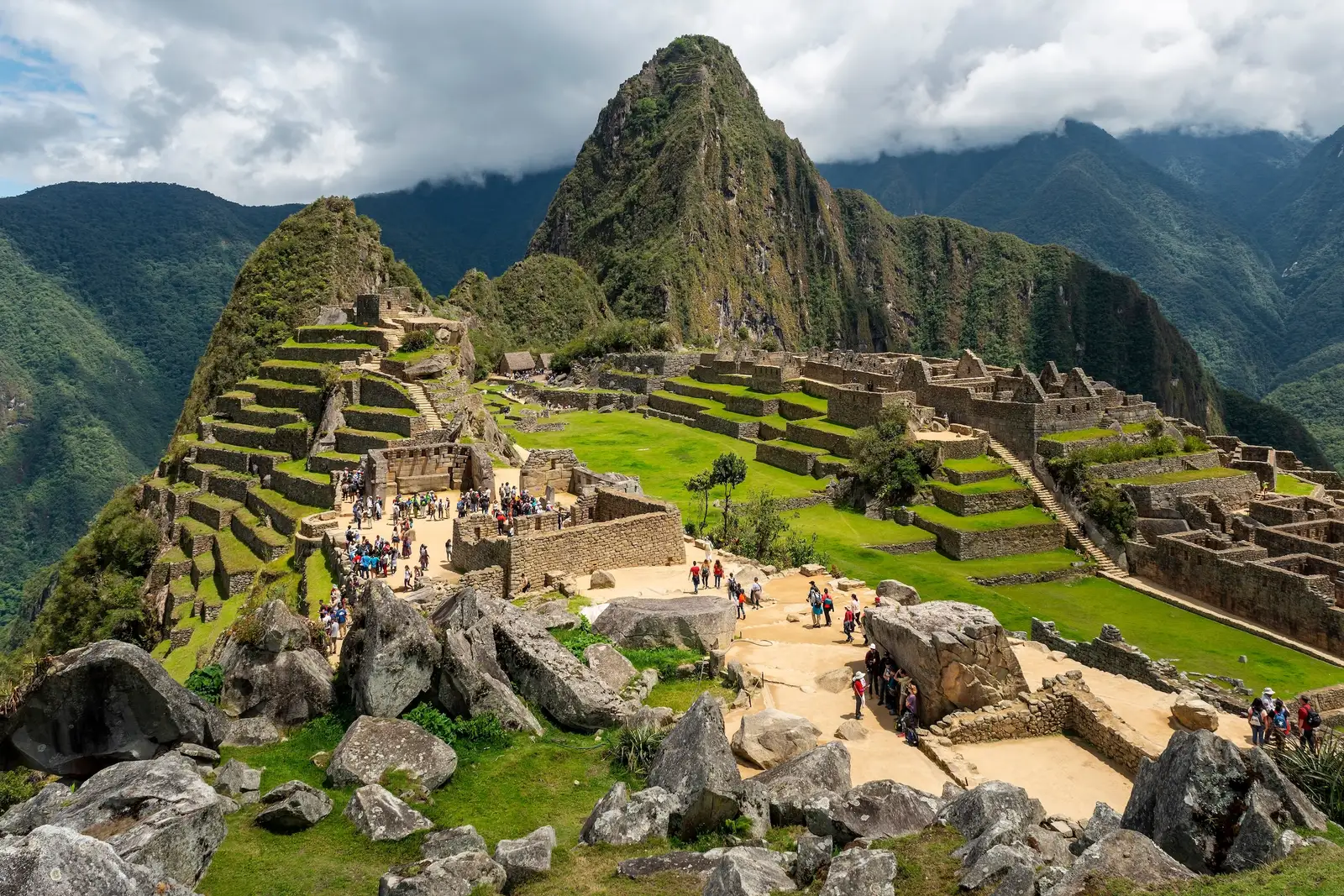
If a specific view is the reason for the trip, check which route reaches it before you pick the month. Waynapicchu, the peak behind the ruins in the photographs, is 2,720 m and has its own smaller quota on top of all this.
April and October, the two months that get overlooked
These two are the answer for most people, and almost nobody arrives at them on their own.
They sit on the shoulders of the dry season, close enough to get the mornings and far enough out that high-season pricing has not started. Tickets are available on shorter notice, the trains are not full, and the terraces are green from the rain that just stopped or is about to start.
The trade is honest: a higher chance of a wet afternoon than in June, and a much lower chance of standing in a queue.
The best time to visit Machu Picchu if you only have the rainy season
December to March is the wet season, and the failure case is specific enough to plan for.
The risk is not a ruined trip. It is cloud on the one morning you booked. Wet-season mornings are often clear, with rain building later, so a single timed entry at the wrong hour on the wrong day is what people actually regret.
The fix is a spare day in Cusco or the Sacred Valley. It costs a night and it converts one roll of the dice into two. In the dry months a spare day is a luxury; from December to March it is the difference between a trip that worked and one that did not.
What you get in return is real: the site at its greenest, far fewer people on the circuits, and the lowest prices of the year on everything around it.
February has one hard exception. The Inca Trail closes for the entire month for maintenance, every year. If the trek is the point of the trip, February is the one month that is simply out.
What the month does to tickets and trains
The entry ticket and the tour are two different deadlines, and people miss the first one because they are watching the second.
Our Machu Picchu trips close bookings two days before departure, which sounds generous. The government entry behind them does not work that way: it is tied to a circuit and a time, the daily quota is finite, and in high season it is gone weeks earlier.
How that plays out in practice:
- May to September. Book the entry as early as you can commit to a date. Treat the hotel and the train as secondary; those you can still solve late.
- April and October. A few weeks is usually enough, and you will have a real choice of entry times.
- November to March. The quota stops being the constraint and the weather becomes one, so spend the flexibility on a spare day rather than an earlier booking.
Prices follow the same curve. The 2 Day Machu Picchu Tour by Bus from Cusco runs at US$215 per person and the 5 Day Best of Cusco and Machu Picchu Tour Package at US$870, and what moves around them by season is the hotel and rail component rather than the guiding.
The altitude decides the order, not the month
This is the part that costs people a day, and it has nothing to do with the calendar.
Machu Picchu sits at 2,430 m. Cusco, the city almost everyone flies into first, is at 3,400 m, nearly a kilometre higher than the ruins. Arriving at altitude and going straight up to the big day is how visitors end up sick on the one morning that counts.
The order that works: two nights in Cusco at its own pace, then down into the Sacred Valley at around 2,800 m, then Machu Picchu. That sequence is why the five-day shape exists rather than a rushed three.
Get the month right and you improve your odds of a clear morning. Get the order right and you are well enough to see it.
Places in this guide
Frequently asked
What is the rainiest month at Machu Picchu?
January and February. The site itself stays open all year, but that is when afternoon rain is closest to daily, and February is also the month the Inca Trail closes entirely for maintenance.
What is the cheapest month to visit Machu Picchu?
November, and February outside Carnival. Both sit outside the May-to-September high season, which is when hotel and train prices in the Sacred Valley are at their highest and availability is at its worst.
How far ahead do you need to book Machu Picchu?
Entry is tied to one of three official circuits and a timed slot, and in high season those sell out weeks ahead. Our tours close bookings two days before departure, but the government entry ticket behind them is the part with the real deadline.
Is one day at Machu Picchu enough?
For the site, yes, and most visits are a single timed entry. What one day does not give you is a second chance if the morning is clouded in, which is the argument for building a spare day into a wet-season trip.
Does the weather at Machu Picchu change during the day?
Often, and in one direction: cloud sits in the valley early and burns off through the morning in the dry months. In the wet months the pattern reverses, with clear mornings and rain building through the afternoon.
Can you walk every route at Machu Picchu in any month?
No. The official portal lists three circuits grouping ten routes, and four of them (1-C, 1-D, 3-C and 3-D) are limited to high season. The month you pick decides part of what you are allowed to walk.